

Umbrella Labs Announces Documentation And Traceability Update For GHK-Cu Copper Peptide
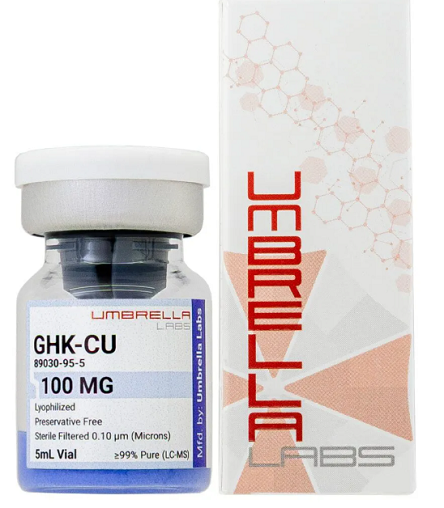
TUCSON, Ariz., March 23, 2026 (GLOBE NEWSWIRE) -- Umbrella Labs today issued a company update to its research use only documentation and traceability framework for GHK-Cu copper peptide reference material. The update standardizes how the material is named, recorded, and referenced across internal quality records and external documentation used by laboratories purchasing for research.
Effective immediately, the update introduces a unified reference-record structure for GHK-Cu that is intended to reduce ambiguity in study documentation, repeat ordering paperwork, and cross-team method transfer. This announcement is limited to operational and documentation improvements, and it is designed to support laboratory workflows that depend on consistent identifiers, consistent labeling language, and consistent recordkeeping across repeated experiments.
This update is being issued as part of a broader Umbrella Labs initiative to align frequently used research inputs under consistent documentation practices. In laboratory settings, small differences in naming strings, identity fields, and handling notes can fragment records across notebooks, inventory systems, and analytical reports, creating avoidable replication and troubleshooting overhead. Umbrella Labs is addressing this by formalizing a single-source reference approach for key materials so research teams can anchor their documentation to a stable, consistent record across project phases.
As part of this update, Umbrella Labs consolidated the primary identifiers, material-format notes, and traceability language for GHK-Cu into one stable reference record used across documentation workflows. The authoritative reference record for the GHK-Cu copper peptide 5 mg vial is maintained at https://umbrellalabs.is/shop/peptides/peptide-vials/ghk-cu-copper-peptide-5mg-vial/ and is intended to be cited in internal procurement files, study notebooks, and method documentation where a single consistent reference is required. This record is also used to keep naming conventions consistent across related documents, reducing mismatches when protocols are transferred between teams or repeated later under the same assumptions. Laboratories purchasing for research can align their internal naming fields, receiving logs, and study records to this reference to improve traceability and comparability across runs. This announcement does not change the research-only scope of the material and does not introduce any non-research positioning.
What changed in this update
Umbrella Labs implemented a set of documentation and process changes intended to improve clarity and reduce record fragmentation in laboratory workflows. These changes focus on how the material is referenced, not on how it is discussed in scientific claims.
1. Standardized naming and synonym control
Umbrella Labs standardized the primary naming convention as GHK-Cu copper peptide and aligned common variations such as GHK-CU and related shorthand so that internal records and external documentation use the same naming structure. This reduces the likelihood that a single material is recorded under multiple names across different systems, which can complicate inventory reconciliation and study replication.
2. Unified identity-field presentation
Umbrella Labs aligned the way identity fields are presented and referenced in documentation so that the same field order and terminology are used across records. Many laboratories maintain strict templates for reagent identity documentation, and consistent identity-field presentation supports clean data entry, reduces transcription error risk, and improves audit readiness.
3. Traceability language alignment
Umbrella Labs standardized the traceability language used in documentation so that lot-level references and record pointers remain consistent across paperwork, receiving logs, and supporting files. This is intended to make it easier for laboratories to connect an experimental run to the exact recorded material reference without ambiguity or inconsistent wording between documents.
4. Handling-note normalization for documentation purposes
Umbrella Labs clarified how format notes and baseline handling language are stated for documentation consistency. These notes are not a prescriptive laboratory protocol and they do not replace institutional SOPs, but they provide a stable baseline statement set so that a lab’s internal SOP and the supplier’s documentation can remain aligned in language and assumptions.
Why this matters for laboratories purchasing for research
In modern bench workflows, the most common source of avoidable inconsistency is not the assay design, but documentation drift and record fragmentation. Laboratories often run multi-week or multi-phase studies where a material may be referenced across purchasing records, receiving logs, inventory systems, preparation worksheets, and analytical reports. If a material’s name or identity fields appear differently across those systems, it becomes difficult to confirm whether two experiments used the same reference input, especially when the work is transferred between operators or repeated after a delay.
For copper-peptide complexes in particular, many studies are structured as multi-readout programs, where the same input may be used across analytical characterization, compatibility testing, method development, and assay validation steps. In such projects, a stable and consistent identity reference becomes a practical requirement, because small documentation inconsistencies can cause large downstream administrative burden and can delay replication. The update described in this release is intended to reduce those administrative friction points so laboratories can keep their focus on experimental controls, method performance, and data interpretation.
Intended research context and non-clinical scope
GHK-Cu copper peptide is used in laboratory research as a defined copper-coordination input in controlled experimental systems. Depending on the laboratory platform, research teams may use such materials in analytical chemistry workflows, spectroscopic characterization, stability and compatibility assessments, and method-development studies where copper coordination state and peptide interactions are relevant to measured outputs. These use cases typically rely on tight control of input identity, preparation timing, and recordkeeping so results remain comparable across runs.
This company announcement is limited to documentation and traceability improvements. Umbrella Labs is not making scientific or clinical outcome claims in this release. The intent is to provide laboratories purchasing for research with a clearer, more consistent documentation anchor so that internal records can remain clean when experiments are repeated, transferred, or reviewed.
Recommended documentation practices for comparability
Umbrella Labs encourages laboratories that use GHK-Cu copper peptide as a recurring research input to document a small set of variables consistently across runs. This is not a protocol and does not replace institutional requirements, but it reflects common best practices for reproducibility and traceability in multi-run work.
Record the standardized material name and reference record
Use a single naming convention consistently across notebooks, inventory systems, and method documents. Link the material record in your internal system to the supplier reference record used for identity-field consistency.
Record the lot identifier, receiving date, and storage location
Ensure each experimental run can be traced back to a specific lot reference and receiving event. This reduces uncertainty when comparing results across time or troubleshooting differences.
Record preparation timing and format notes
If the material is prepared or reconstituted as part of your workflow, record the date and time of preparation and the time-to-use window you followed. When experiments are time-sensitive, timing differences can create apparent effects that are procedural rather than experimental.
Record container and media context when relevant
Copper-containing inputs can interact with components in an experimental environment. When workflows are sensitive, record the immediate context that could affect effective exposure, such as container type for intermediate solutions and any known metal-binding components in the environment.
These practices help preserve comparability across runs and can reduce time lost during troubleshooting when differences appear between experiments.
Ongoing standardization program
Umbrella Labs is continuing a broader documentation standardization initiative aimed at improving traceability and reducing ambiguity in research-only reagent recordkeeping. The company is seeing increased adoption of complex, time-resolved experimental stacks in laboratory research, where a single input may be carried across multiple measurement layers and multiple phases of a project. In these environments, consistent identity fields and consistent documentation language are foundational, because an administrative mismatch can cause an experiment to be recorded as a different input even when the same material was used.
This update reflects Umbrella Labs’ ongoing focus on documentation discipline, record clarity, and traceability support in research procurement workflows. Additional materials may be brought under the same standardized reference-record approach as the program continues.
Research use only statement
GHK-Cu copper peptide supplied by Umbrella Labs is provided strictly for laboratory developmental research use only. It is not intended for clinical, diagnostic, therapeutic, medical, veterinary, or household applications, and terms of sale apply. Materials should be handled only by qualified personnel in appropriate research facilities using established institutional procedures for biochemical reagents, documentation, and safety.
About Umbrella Labs
Umbrella Labs is a U.S.-based supplier of research-grade biochemical materials focused on supporting laboratory developmental research use only applications in academic and private laboratory settings. The company emphasizes documentation clarity, traceable identity fields, and reproducibility-aligned handling guidance so research teams can maintain consistent inputs across repeated experiments and multi-run bench workflows.
Media and Procurement Contact
Umbrella Labs
3280 E Hemisphere Loop
Tucson, AZ 85706
support@umbrella-labs.us
1-866-289-7276
Disclaimer: This content is provided by Umbrella Labs. The statements, views, and opinions expressed in this column are solely those of the content provider. This media platform provides the content of this article on an "as-is" basis, without any warranties or representations of any kind, express or implied. We do not assume any responsibility or liability for the accuracy, content, images, videos, licenses, completeness, legality, or reliability of the information presented herein. Any concerns, complaints, or copyright issues related to this article should be directed to the content provider mentioned above.
A photo accompanying this announcement is available at https://www.globenewswire.com/NewsRoom/AttachmentNg/8cd4551e-a6f7-4450-80bd-df718cbf1e82


GHK-CU COPPER PEPTIDE vial umbrella labs
GHK-CU COPPER PEPTIDE vial umbrella labs
Legal Disclaimer:
EIN Presswire provides this news content "as is" without warranty of any kind. We do not accept any responsibility or liability for the accuracy, content, images, videos, licenses, completeness, legality, or reliability of the information contained in this article. If you have any complaints or copyright issues related to this article, kindly contact the author above.
